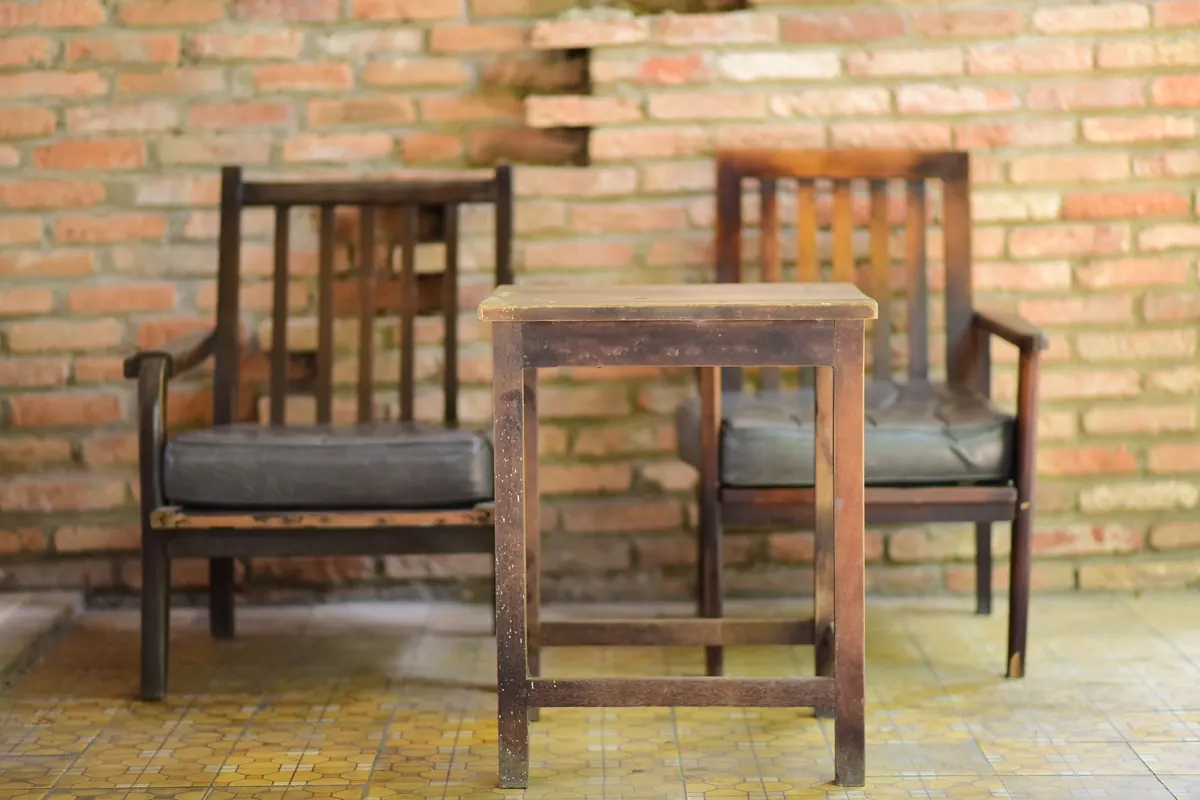
A painted dresser in the corner of a charity shop can look almost exactly like the one that stood in your grandmother's back bedroom. The price tag usually gives the game away, one way or the other: either far too low for solid old timber, or oddly confident for something with a factory-fresh smell. Knowing which is which matters. A genuinely old piece will keep going for another fifty years. A reproduction with a distressed finish will look tired in three, and no amount of wax will fix that.
Turn the piece over. Genuinely old cottage furniture has a body of solid timber — oak, elm, pine, ash, sometimes fruitwood. The parts nobody bothered to finish are where the truth lives: drawer bottoms, backboards, the underside of a seat, the inside of a carcass. Rough-sawn softwood as a secondary wood is completely normal. Cabinetmakers used cheaper timber for backs and drawer bottoms for centuries.
What is not normal is uniformity. If every surface is smooth sheet material, if the back panel flexes and looks like glued wood chips, you are looking at plywood, blockboard or MDF. Modern. Lift the piece too. Old solid timber is heavy in a way that surprises you, especially if it's oak.
Hand-cut dovetails are uneven. The pins vary in width, the spacing isn't regular, and you'll often see fine saw marks inside the sockets, or thin slivers of wood hammered in to close a gap. Machine-cut dovetails are the opposite: identical tails at perfect intervals, all the same angle, with a small rounded notch at the base of each pin where the router bit cut.
Old chairs and tables are usually held with mortise-and-tenon joints, often pinned through with wooden pegs that sit slightly proud and have darkened with age. Dowels and biscuits belong to the twentieth century. On nails and screws, look closely: cut nails with square shanks and visible tapers point to older work, while slotted screws generally predate Phillips heads, which only became common in the 1930s. A row of identical Phillips screws holding a drawer front is a modern signature.
Real wear is uneven and predictable. It builds on the front edge of a dresser top, the top rail of a chair back, the lip of a drawer, the base of the legs, the ring around a handle where fingers have rubbed for decades. Paint crazes and flakes in its own time, and later coats sink into the cracks.
Faked wear is decorative rather than logical. Sanded edges are too even. Drilled "wormholes" sit in tidy clusters on flat, visible faces instead of following grain and damp. Dirt is rubbed into random spots no hand would ever touch. Genuine pieces also carry old repairs — a replaced foot, hinges moved an inch, a leg tipped — and those are signs of a long life, not faults.
Metal is hard to age convincingly, so it's worth handling every handle, hinge and lock.
Words do a lot of work in this market. "Vintage style", "antique finish", "reclaimed look" and "shabby chic" are all reasonable descriptions of something new. That doesn't make the seller dishonest; plenty of people genuinely don't know what they've got. Ask where it came from, then check the back, the base and the inside of a drawer.
One useful distinction: an 1890s pine chest painted in chalk paint is still an 1890s pine chest. Paint is a surface, not an eraser. Judge the bones underneath. A brand-new cabinet painted and sanded to look old is a different object entirely, and it should be priced accordingly.
A price far below what solid old timber costs to produce should make you look harder, not reach for your wallet. So should a stall holding three or four "one-off" pieces with identical shapes and identical wear. That's factory output, not farmhouse salvage.
Listen to the story, too. Honest provenance is usually boring: "It came from a house clearance in the next village." Elaborate tales tend to be attached to modern reproductions, and vague answers to direct questions are worth noting. If you're spending serious money on a piece you plan to keep, pay a qualified restorer or auction house valuer for an opinion. That fee is cheaper than a mistake.
The best cottage furniture isn't the piece with the oldest provenance certificate. It's the one that fits the room, takes knocks without drama, and gets better as it collects its own marks. Learn to read the wood and the joints, ask a few direct questions, and let the price either make sense or not. Then buy the thing you'd be happy to keep even if you were wrong about its age — because that's the piece you'll still be using long after the argument about dates stops mattering.
Photo: Sóc Năng Động / Pexels

Choose the right herbs, prep a box that drains properly, and a windowsill can supply fresh leaves all winter — even...

Two pantry-friendly methods — stovetop simmer pots and homemade linen sprays — fill a cottage with warm bakery...

Limewash and chalk paint both give cottages a soft matte look, but they behave very differently on plaster, brick...

Cozy cottage living, decorating, and inspiration.
